


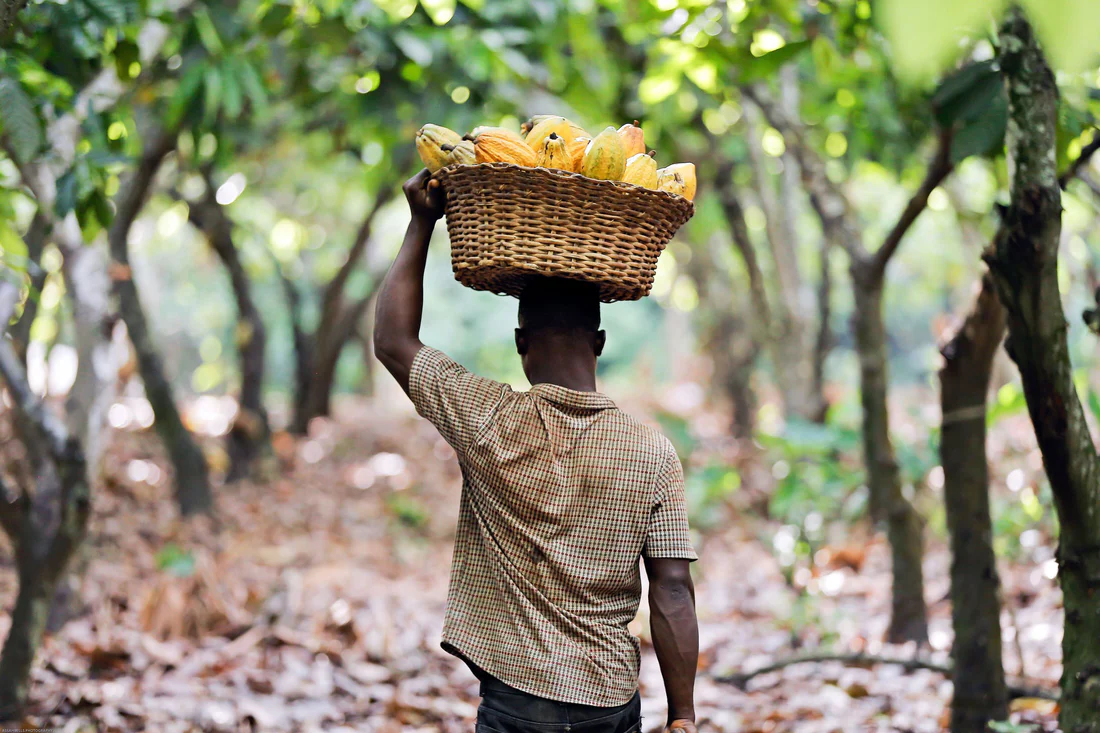
This project aims to utilize the existing cocoa farms in Ghana as carbon sinks to sequester carbon emissions, reduce global warming potential, and generate carbon credits through a systematic carbon offset program. The program will engage approximately three million smallholder cocoa farmers, covering an area of three million hectares. The project will follow a policy implementation plan to monitor, verify, and manage carbon sequestration activities on participating farms. Carbon credits generated will be sold to industries in the cocoa value chain and other sectors seeking to offset their emissions.
1. Project Objectives:
- Carbon Sequestration: Use cocoa farms to sequester CO2 through improved farming practices and agroforestry.
- Carbon Credit Generation: Develop a system to calculate and verify carbon sequestration, issuing carbon credits that can be sold on the carbon market.
- Support for Smallholders: Provide cocoa farmers with training and incentives for sustainable farming practices that contribute to carbon sequestration.
- Partnership Development: Partner with key stakeholders in the cocoa value chain and industries seeking to offset their emissions.
2. Policy Implementation Plan for Monitoring Farmers
2.1 Stakeholder Engagement
- Government: Collaborate with the Ghana Cocoa Board (Cocobod), local agricultural bodies, and environmental authorities to align the project with national climate policies.
- Cocoa Cooperatives: Partner with farmer cooperatives and associations to ensure wide-reaching participation and smooth implementation.
- Third-Party Auditors: Employ third-party certification bodies (e.g., Verra, Gold Standard) for independent verification and auditing.
2.2 Farmer Enrollment and Education
- Farmer Outreach: Conduct nationwide campaigns to inform farmers about the benefits of participating in carbon offset programs. Use local languages, radio, and community leaders for awareness.
- Farmer Education: Provide farmers with training on carbon farming techniques, agroforestry, and best practices for improving carbon sequestration on their farms.
- Incentives: Offer financial incentives for farmers who participate in training and follow best practices for carbon sequestration.
2.3 Monitoring and Data Collection
- Satellite Monitoring: Use satellite technology (e.g., remote sensing, GIS) to track land use, deforestation, and crop health across the three million hectares.
- On-Farm Data Collection: Equip farmers with mobile apps or tools to track inputs like soil carbon content, crop yield, agroforestry activities, and other relevant data.
- Third-Party Verifiers: Collaborate with external auditing firms to conduct periodic field visits and verify the accuracy of carbon sequestration claims.
2.4 Reporting and Transparency
- Digital Platform: Develop a centralized digital platform where farmers and project managers can upload data and monitor progress in real-time.
- Carbon Auditing: Regular audits will be performed to verify the carbon sequestration rates, with certified reports issued annually.
- Public Reporting: Provide transparent reports on the amount of carbon sequestered, distributed as carbon credits, and any associated impacts, including economic and environmental benefits.
3. Carbon Accounting Method to Quantify Sequestered CO2
3.1 Baseline Carbon Sequestration Rate
The baseline for carbon sequestration will be determined based on current agricultural practices. A literature review and consultations with experts in agroforestry and soil science will help establish the baseline for cocoa farm carbon storage. It is essential to account for the following factors:
- Cocoa Trees: Average carbon sequestered by cocoa trees per hectare.
- Agroforestry: The additional carbon sequestration potential of intercropping cocoa with trees such as banana, plantain, or indigenous trees.
- Soil Carbon: Incorporation of soil management techniques like cover crops and mulching to enhance soil organic carbon content.
3.2 Carbon Sequestration Models
The project will use established models such as the Intergovernmental Panel on Climate Change (IPCC) Guidelines for National Greenhouse Gas Inventories to estimate carbon sequestration potential. Specific models for agroforestry and tropical farming systems will be used to account for both above-ground biomass (trees) and below-ground biomass (soil carbon).
- Above-ground Carbon Sequestration: Estimation based on biomass growth of cocoa trees and agroforestry components. Typical cocoa trees sequester around 0.6 to 2.3 tons of CO2 per hectare annually depending on the region, cultivation practices, and tree density.
- Soil Carbon: Agroforestry practices and organic farming techniques can sequester additional 0.3 to 1 ton of CO2 per hectare annually.
For a 3 million-hectare farm, the total annual carbon sequestration will be calculated based on these factors.
3.3 Total Carbon Sequestration Calculation
- Cocoa Farms’ Carbon Sequestration:
- Average sequestration rate: 1.5 tons of CO2 per hectare per year (taking into account a combination of trees, soil, and agroforestry).
- Total sequestration: 3,000,000 hectares * 1.5 tons CO2 = 4,500,000 tons of CO2 per year.
3.4 Carbon Credit Generation
The carbon credits will be based on verified carbon sequestration:
- Verified Carbon Credits (VCUs): Each VCU represents one metric ton of CO2 equivalent (CO2e) removed from the atmosphere.
- Annual Carbon Credits: The project can generate approximately 4.5 million VCUs per year (based on 1.5 tons CO2 per hectare for 3 million hectares).
3. Carbon Accounting Method to Quantify Sequestered CO2
3.1 Baseline Carbon Sequestration Rate
The baseline for carbon sequestration will be determined based on current agricultural practices. A literature review and consultations with experts in agroforestry and soil science will help establish the baseline for cocoa farm carbon storage. It is essential to account for the following factors:
- Cocoa Trees: Average carbon sequestered by cocoa trees per hectare.
- Agroforestry: The additional carbon sequestration potential of intercropping cocoa with trees such as banana, plantain, or indigenous trees.
- Soil Carbon: Incorporation of soil management techniques like cover crops and mulching to enhance soil organic carbon content.
3.2 Carbon Sequestration Models
The project will use established models such as the Intergovernmental Panel on Climate Change (IPCC) Guidelines for National Greenhouse Gas Inventories to estimate carbon sequestration potential. Specific models for agroforestry and tropical farming systems will be used to account for both above-ground biomass (trees) and below-ground biomass (soil carbon).
- Above-ground Carbon Sequestration: Estimation based on biomass growth of cocoa trees and agroforestry components. Typical cocoa trees sequester around 0.6 to 2.3 tons of CO2 per hectare annually depending on the region, cultivation practices, and tree density.
- Soil Carbon: Agroforestry practices and organic farming techniques can sequester additional 0.3 to 1 ton of CO2 per hectare annually.
For a 3 million-hectare farm, the total annual carbon sequestration will be calculated based on these factors.
3.3 Total Carbon Sequestration Calculation
- Cocoa Farms’ Carbon Sequestration:
- Average sequestration rate: 1.5 tons of CO2 per hectare per year (taking into account a combination of trees, soil, and agroforestry).
- Total sequestration: 3,000,000 hectares * 1.5 tons CO2 = 4,500,000 tons of CO2 per year.
3.4 Carbon Credit Generation
The carbon credits will be based on verified carbon sequestration:
- Verified Carbon Credits (VCUs): Each VCU represents one metric ton of CO2 equivalent (CO2e) removed from the atmosphere.
- Annual Carbon Credits: The project can generate approximately 4.5 million VCUs per year (based on 1.5 tons CO2 per hectare for 3 million hectares).
4. Strategic Partners in the Cocoa Value Chain
- Cocoa Processing Companies: Companies such as Olam, Mars, and Nestlé could be strategic partners. These companies may be interested in offsetting their carbon emissions from cocoa production and processing.
- Cocoa Traders and Exporters: Partner with organizations like Ghana Cocoa Marketing Board (Cocobod) and international cocoa traders to help integrate carbon credits into their sustainability programs.
- Agrochemical Suppliers: Firms providing inputs for agroforestry and sustainable farming practices could contribute technical knowledge and infrastructure support.
- Chocolate Manufacturers:
5. Project Cost Breakdown
5.1 Initial Setup Costs
- Farmer Education and Outreach (for nationwide campaigns, training programs, and material development).
- Monitoring Infrastructure (satellite monitoring, mobile apps for data collection, and reporting systems).
- Agroforestry Inputs (to provide seedlings, tools, and technical assistance for agroforestry).
- Certification and Verification (third-party auditing, carbon credit certification, and reporting)
5.2 Ongoing Operational Costs
- Farmer Incentives and Support:
- Monitoring and Data Management
- Carbon Credit Sales and Marketing
6. Conclusion
This Carbon Offset Initiative offers a sustainable and impactful solution for carbon sequestration through the utilization of cocoa farms in Ghana. With an estimated annual sequestration of 4.5 million tons of CO2 and a robust plan to involve local farmers, the project not only supports climate change mitigation but also boosts local economic development. The estimated revenue from carbon credit sales provides a sustainable financial model, while the collaboration with cocoa industry players ensures a long-term impact on both the environment and the cocoa value chain.